

For years, the goal of high-end gaming was “native resolution”–rendering every single pixel at the target output. But as we push toward 4K and integrate complex lighting, the compute cost has become unsustainable. This is why AI upscaling has moved from a niche feature to a core requirement for modern titles.
At its simplest, upscaling allows a GPU to render a game at a lower internal resolution (e.g., 1080p) and then use an algorithm to scale that image up to a higher output (e.g., 4K). This reduces the number of pixels the GPU has to calculate per frame, which directly boosts your FPS.
How DLSS Works: The Hardware Approach

Nvidia’s DLSS (Deep Learning Super Sampling) is a hardware-accelerated approach. Unlike traditional scaling, it doesn’t just stretch pixels; it uses a deep learning neural network to “predict” what the high-resolution image should look like based on lower-resolution data and motion vectors.
The secret sauce here is the Tensor Core–specialized AI hardware found on RTX GPUs. By offloading the upscaling work to these cores, DLSS can reconstruct a sharp image without taxing the main CUDA cores used for rendering. This allows for higher performance while maintaining an image quality that often rivals or exceeds native resolution.
How FSR Works: The Algorithmic Approach
AMD’s FSR (FidelityFX Super Resolution) takes a different path. Instead of relying on dedicated AI hardware, it uses spatial and temporal upscaling algorithms that run on standard compute shaders.
Because FSR doesn’t require specific Tensor cores, it is cross-platform by design. It can run on AMD GPUs, Nvidia GPUs, and even integrated graphics. While it lacks the specialized neural network processing of DLSS, it achieves similar performance gains by using high-quality filters and temporal data to fill in the gaps between pixels.
Temporal Reconstruction vs. Spatial Scaling
To understand why these tools are better than “old-school” upscaling, you have to look at how they handle time.
Traditional spatial upscaling only looks at a single frame. It sees a group of pixels and tries to guess what goes in the middle. This often results in blurriness or shimmering edges. DLSS and FSR use temporal upscaling, meaning they look at previous frames to gather more information about the scene. By tracking how objects move across the screen, the system can accumulate detail over several frames, creating a stable and sharp image even when the internal resolution is low.
The Impact on Modern Hardware
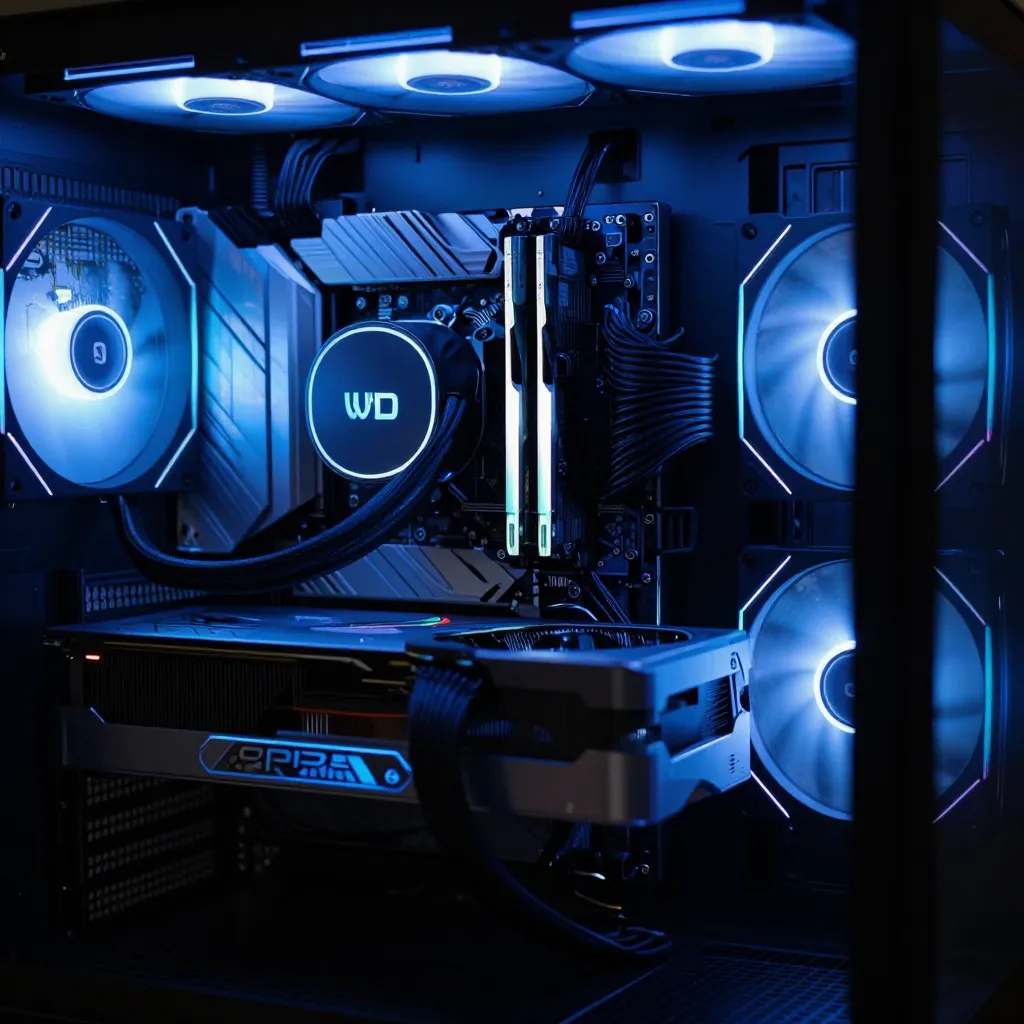
We see this trade-off clearly when looking at VRAM and compute budgets. For developers and tinkerers, the ability to drop the render target while maintaining visual fidelity is a massive win for optimization.
In our own work with local LLMs and high-end GPUs, we’ve noted that memory bandwidth is often the primary bottleneck. The RTX 5090 represents a shift in this calculus by increasing VRAM to 32GB, which provides more headroom for both complex AI models and high-resolution gaming assets. When you combine that raw hardware power with efficient upscaling, the limit is no longer how many pixels you can push, but how efficiently you can reconstruct them.
Upscaling has fundamentally changed the relationship between resolution and performance. By moving the burden from brute-force rendering to intelligent reconstruction, DLSS and FSR ensure that high-fidelity gaming remains accessible even as visual complexity continues to scale.