Most AI content tools follow a predictable pattern: they take a prompt, generate a wall of mediocre text, and call it “automation.” For solo operators and indie publishers, this isn’t helpful. The goal isn’t just to publish more; it is to scale without producing AI spam.
At Glad Labs, we treat our content pipeline as an engineering problem rather than a prompting exercise. We have moved beyond the chatbot phase to build an AI-operated business where quality automated generation exists alongside strict human oversight.
Moving from Prompting to Wrangling
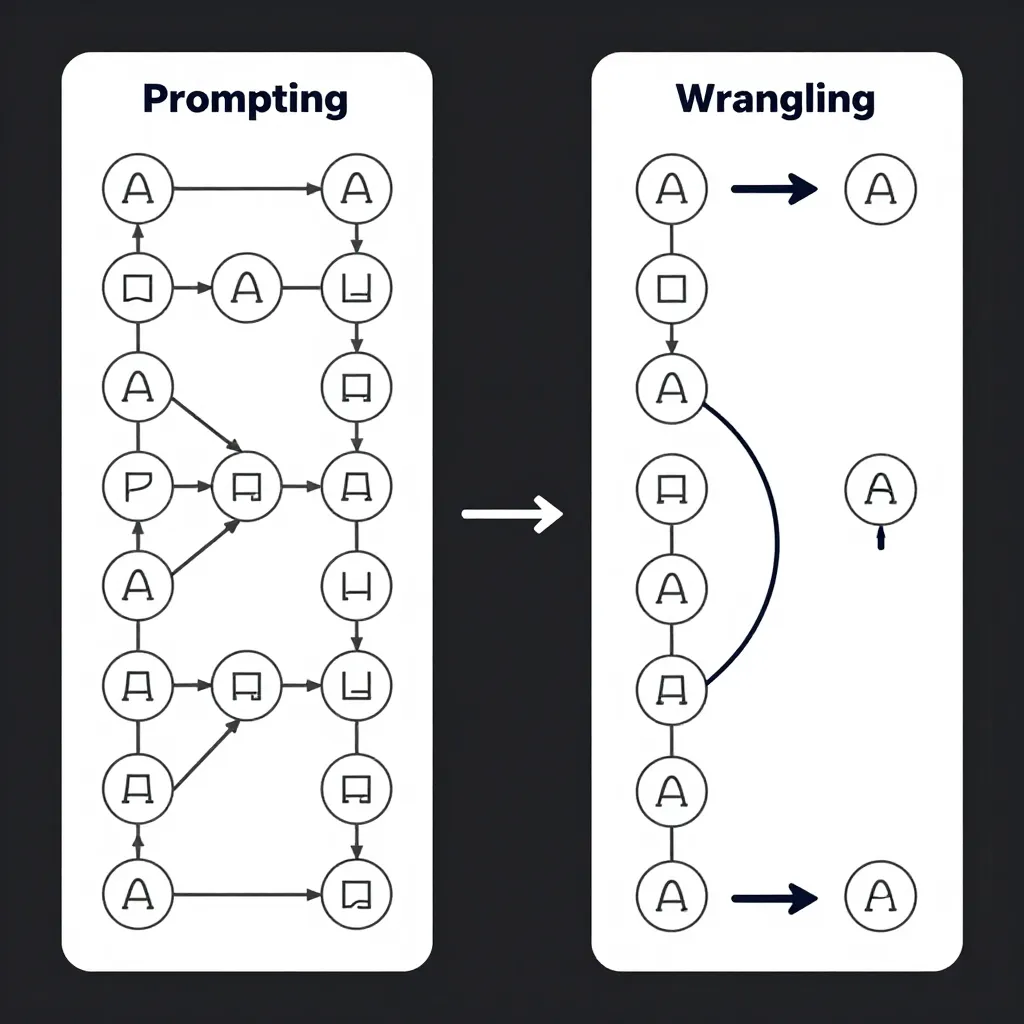
The early days of generative AI were dominated by prompt engineering–the art of writing clever instructions to get a generic model to behave. That is a fleeting skill dependent on the whims of a provider. For developers, the focus has shifted toward “model wrangling.”
This means building infrastructure that supports autonomous agents capable of planning and execution. An agent isn’t just a chatbot; it is a program that can take an action. In our system, we don’t just ask for a blog post; we utilize pipelines that handle research, drafting, and optimization.
By leveraging open-source LLM agents, developers can move away from proprietary black boxes and build self-hosted engines on their own hardware, such as an RTX 5090 running Docker.
The Technical Architecture of a Content Pipeline

A professional workflow eliminates the manual loop of drafting and editing that typically creates bottlenecks in marketing teams (source). To avoid the “AI spam” trap, we adopted a system called Poindexter to scale our pipeline while maintaining quality (source).
An effective technical workflow typically breaks down into these stages:
1. Ideation and Research
Instead of guessing topics, automation can handle the initial research phase. AI tools now streamline everything from generating topic ideas to designing visuals (source).
2. Autonomous Execution
The shift toward autonomous workflows allows agents to handle the heavy lifting. Integrated AI workflows can reduce content production time by 60-80% and increase output by 3-5x.
3. Human Editorial Oversight
The highest quality results come from a hybrid model where AI handles the drafts and humans focus on strategy (source). We implement this as “quality automated content generation with human oversight.”
Solving for Reliability and Scale
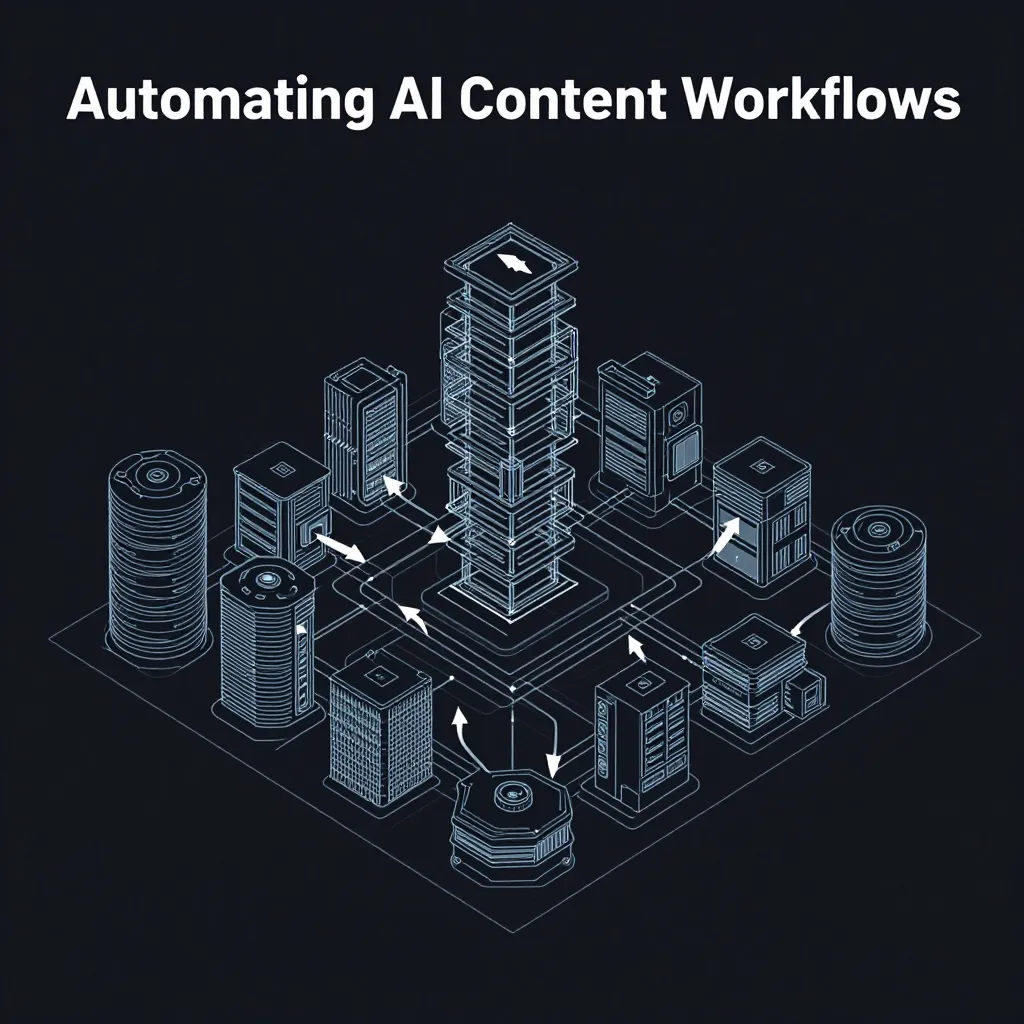
Automation introduces new failure modes. When you move from a chatbot to a production pipeline, you have to address hallucinations and security risks (source).
We also encountered the “distribution problem.” A pipeline that generates content autonomously is useless if nobody sees it. SEO in competitive AI niches can be a 6-12 month game, meaning the technical system must be paired with a long-term distribution strategy.
For those building these systems, scaling requires moving away from rigid structures like GitFlow and adopting workflows that actually scale (source). This allows for the rapid iteration needed when tuning prompts or updating model versions across a pipeline.
Building an AI-operated content business requires treating your pipeline like any other piece of software: it needs systematic debugging, monitoring for drift, and a focus on reliability over raw volume. When you stop prompting and start building infrastructure, you move from generating noise to creating an asset.